
By Miles Gloetzner
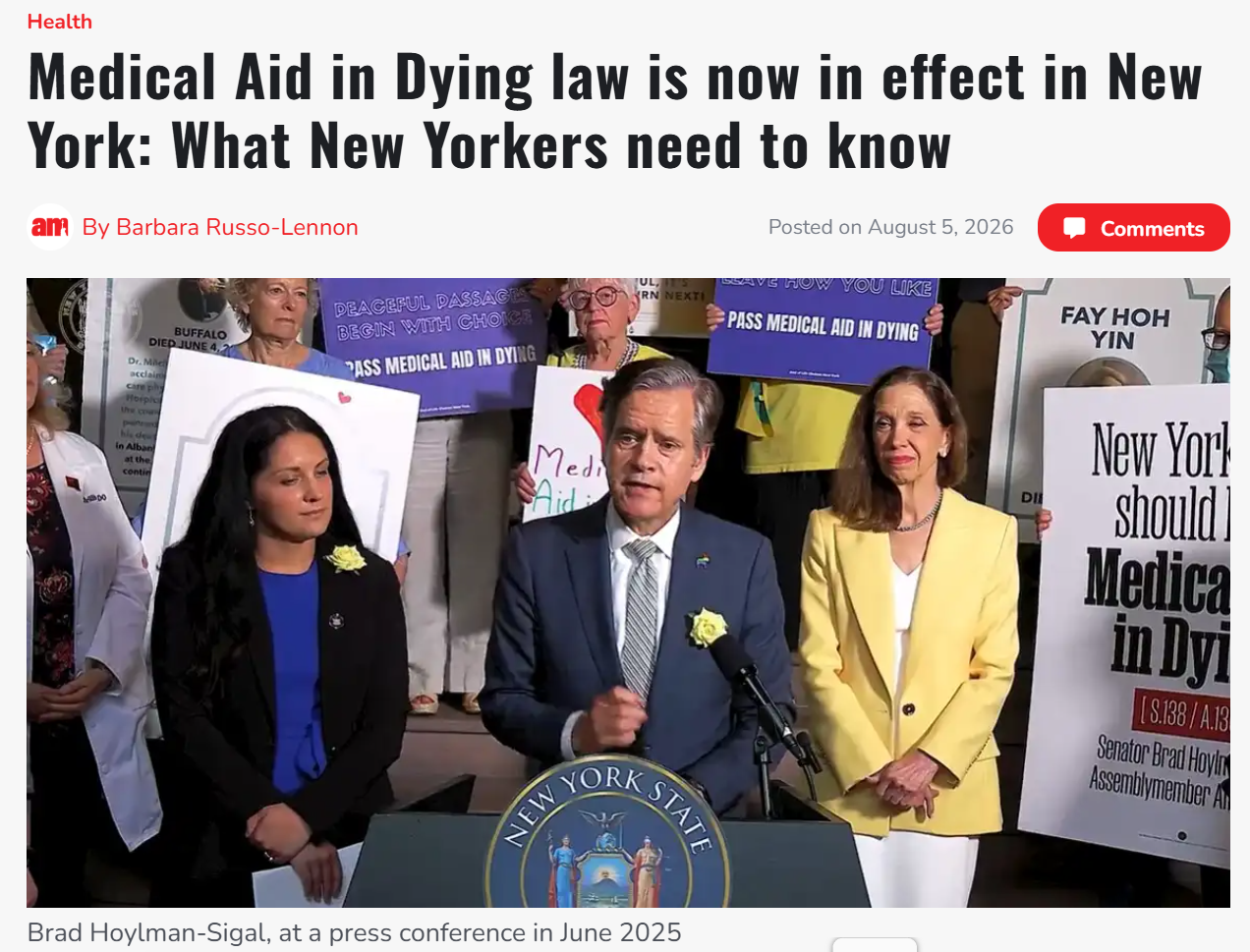
Press conference image from 2025 regarding medical aid in dying (MAID) in New York.
I think that past generations would be appalled and future ones will be ashamed to know that we're offering a pharmaceutical death to people in the most vulnerable time of their adult life.
I'm talking about MAID - in light of this being an option in NY as of yesterday.
Contrary to popular and well-funded opinions, I'll be a voice that isn't pleased with this.
First, human life is our first right and intentionally ending it is wrong.
All points flow from this:
1. It's known that some MAID requests are actually a cry of the heart of feeling like a burden to their loved ones.
2. By offering it, we're communicating that having them around doesn't make a difference.
3. Why do we offer suicide prevention to everyone except to those facing the vulnerable time of end of life?
4. Confuses the whole point of healthcare which has always been to support someone to live.
5. By ending suffering via MAID, we're also ending life, joy, love, purpose, & relationships. It reminds me of seeing a check engine light and deciding to destroy the car.
6. There are no studies of what the poisonous levels of MAID medications actually do to someone - not even a study about what one of 4 (more or less) medications do at such an extreme dose.
7. MAID is contrary to what the death positive movement is all about: normalizing, dialoging, overcoming related fears, unmedicalizing dying.
8. Hospice doctors can now actually become "Dr. Death" and hospice nurses "Angels of Death." Those in the field have been working against these derogatory titles - except now some actually are.
9. MAID is not healthcare. It's the end of health and the cessation of care.
10. Feeds on ableism - that my life only matters if I can DO certain things or "I'd rather die than not be able to _____."
11. Can prevent interest and investment in further research on new hospice related medications including those for difficult to manage pain.
12. There is always palliative sedation for extreme situations which honors the person's life while providing the needed pain or other symptom relief.
13. Once we accept the moral premise that certain types of suffering can make a life not worth living, what logical barrier prevents a society from eventually offering death for suffering at any stage of life?
14. We could be helping to take the most precious time of someone's life away from them. And with unreliable prognosis in particular, it's not uncommon for people to live over a year on hospice.
15. Blurred lines for those with chronic conditions: if a young adult with insulin dependent diabetes was to stop taking their medication (for example), they'd be eligible for hospice and now eligible for MAID....
16. Is it really autonomy to be in one's most vulnerable state of life with (possibly) financial burdens, family strain, and internal fears to be offered MAID by a trusted health professional and agree to it?
Some of these are inspired by Amanda Achtman (Dying to Meet You) - she's an incredible human being.